
Don Advocates Geoformatics for Strengthening Key Economic Sectors
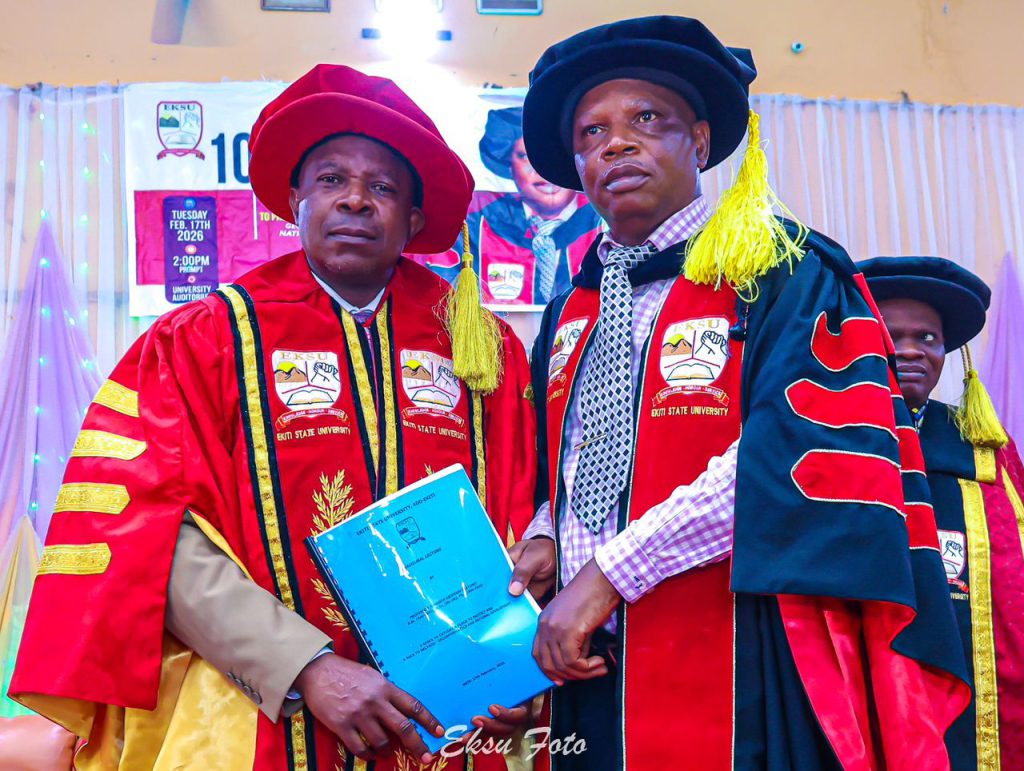
A geoformatics expert at Ekiti State University, Ado Ekiti, Professor Johnson Olatunji, has called on relevant authorities to adopt geoformatics as a strategic tool for enhancing critical sectors of the economy.
Olatunji made this recommendation while delivering the institution’s 100th inaugural lecture, where he underscored the importance of geoformatics and space-based technologies in driving national development. He noted that, “Life is a space to explore and a place to protect.”
In his lecture titled “A Space to Explore, a Place to Protect, and a Race to Salvage: Geoformatics and National Development,” the scholar highlighted the growing relevance of geospatial technologies in addressing challenges across environmental management, agriculture, governance, and national security.
He stressed that the world is firmly in the age of technology, adding that geoformatics has already been widely deployed in developed countries with measurable success. According to him, the technology is no longer optional but essential for effective national planning and sustainable development.
Olatunji identified at least seventeen areas where geoformatics can be applied, including food security, disaster management, urban planning, environmental monitoring, governance, and security. Drawing from over three decades of research and practical application in Nigeria, he emphasized the potential of these tools in managing environmental challenges and promoting sustainable living.
In his remarks, the Vice-Chancellor of Ekiti State University, Professor Joseph Babatola Ayodele, described the lecture as a defining moment. He noted that it was the fifteenth inaugural lecture he had presided over in less than two years as the institution’s ninth substantive Vice-Chancellor.
Ayodele reiterated the importance of research-driven knowledge in national development, stressing that no nation can thrive without integrating geoformatics and Geographic Information Systems (GIS) into planning and decision-making processes. He added that many global institutions and modern educational systems now rely heavily on geography-based technologies.
The Vice-Chancellor also acknowledged that the lecture broadened his perspective on geography, a discipline often narrowly perceived as the study of physical features.
The event attracted a wide array of participants, including government officials, traditional rulers, principal officers of the university, deans of faculties, academics, and students.