
EKSU DON ADVOCATES SCIENCE DRIVEN WATER EDUCATION AND ECOSYSTEM PROTECTION
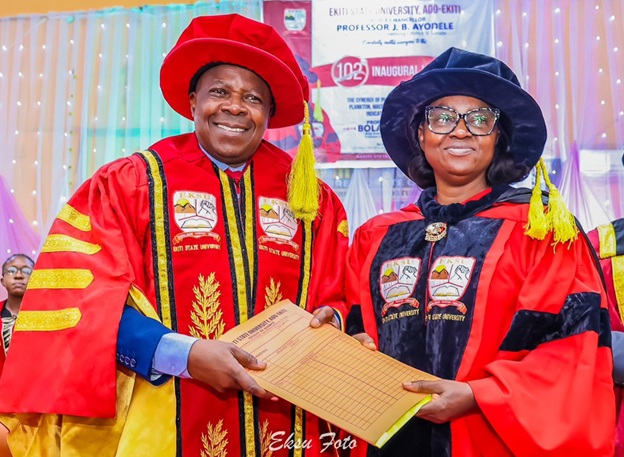
A Professor of Ecology and Environmental Biology at Ekiti State University Ekiti State, Josephine Edward, has called for the integration of scientific knowledge into policy, community practices and environmental stewardship to safeguard inland water ecosystems.
Edward X-rayed this while delivering the 102nd Inaugural Lecture titled “The Synergy of Physicochemical Parameters, Plankton, Macroinvertebrates and Fish as Indicators of Aquatic Health”
In her presentation, the educational expert, underscored the role of academic research as a critical tool for addressing environmental challenges and shaping sustainable development.
She stressed that universities must go beyond theoretical instruction by producing actionable knowledge that directly impacts society, particularly in the management of vital natural resources such as rivers and reservoirs.
Using case studies from major water bodies, including Elemi River, Ureje Reservoir and River Ogbese, Edward demonstrated how scientific assessment of water quality and biodiversity can serve as a foundation for policy decisions, environmental education and community engagement.
According to her, understanding the interaction between physicochemical properties and biological indicators, such as plankton, macroinvertebrates, and fish, provides a comprehensive framework for monitoring aquatic health and training the next generation of environmental scientists.
She stressed the importance of incorporating field-based learning and research into the academic curriculum, saying that, organisms like ephemeroptera, Plecoptera and trichoptera are not only ecological indicators but also valuable teaching tools for students studying environmental sustainability. She said, “education must drive our response to ecological decline. When students and communities understand how aquatic systems function, they are better equipped to protect them.”
In her recommendations, the academic scholar advocated stricter pollution control, promotion of eco-friendly farming, establishment of riparian buffer zones, and community-based watershed management, particularly around critical ecosystems such as the Egbe reservoir and degraded areas like Odo Ayo River.
She also called on the government and people on the need for the protection of economically important fish species, including clarias gariepinus and tilapia zillii, noting their relevance to food security, research and local livelihoods..
“What is required now is not just awareness, but the application of knowledge – policies guided by science, informed communities, and a collective resolve to sustain our aquatic ecosystems,” she said.
In his remarks, the Vice-Chancellor, Prof. Joseph Ayodele, commended the inaugural lecturer for her outstanding academic contributions, describing her inaugural lecture as a reflection of the university’s commitment to research, innovation and societal impact.
He noted that her work exemplifies the transformative power of education in addressing real-world challenges and advancing sustainable development.
The event which took place on Tuesday, 17th March, 2026 at the University Main Auditorium, had in attendance, royal fathers, friends and families of the inaugural lecturer and members of the university community.